
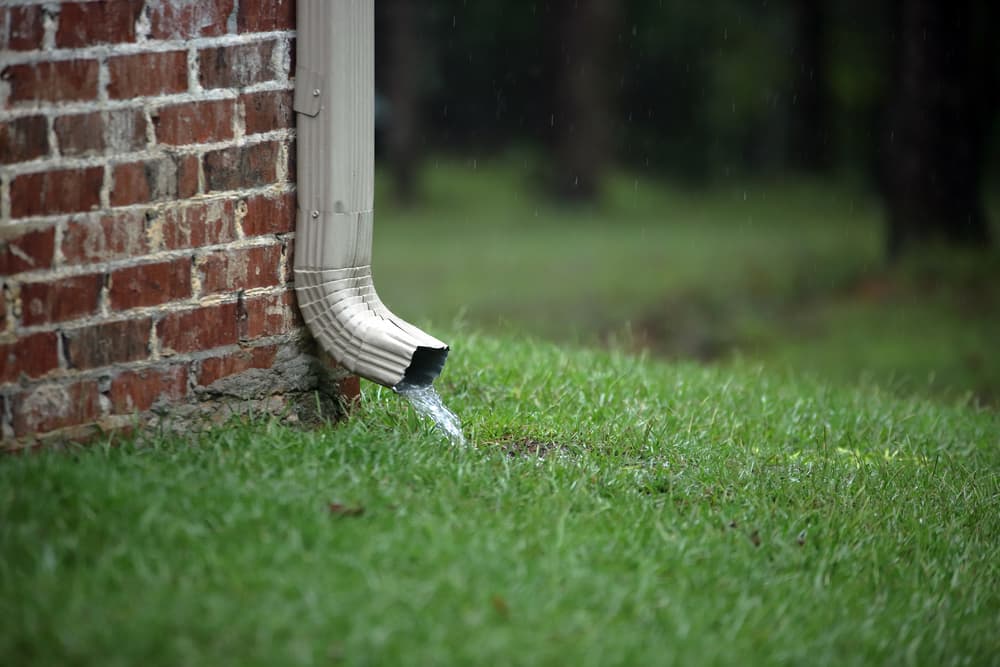
Rainwater should move away from a house instead of collecting beside the foundation. Poor drainage can leave soil saturated near walls, create muddy areas, contribute to erosion, and increase the amount of moisture pressing against below-grade construction.
Foundation drainage maintenance therefore begins above ground. Roof runoff, grading, downspout discharge, surface channels, and landscaping all influence where rainwater goes.
Watch What Happens During Rain
One of the easiest ways to understand a drainage problem is to observe the property during moderate rainfall. Look for water pooling near the house, overflowing gutters, short downspouts, eroded soil, or flow paths that direct runoff toward the foundation.
A practical property maintenance routine should include these observations because dry-weather inspections may miss how quickly water gathers in low areas.
Check Again After the Rain Stops
Standing water that remains beside the house after rainfall deserves attention. Note where it collects and whether the same location repeatedly becomes saturated.
Photos taken during wet weather can make it easier to compare conditions after improvements.
Keep Roof Runoff Moving Away
Gutters and downspouts concentrate large amounts of roof water into specific discharge points. Blockages, disconnected sections, or poorly directed outlets can dump water beside the foundation.
Homeowners browsing house maintenance advice should inspect the entire runoff path rather than only cleaning the gutter channel. Water needs somewhere suitable to go after it enters the downspout.
| Drainage Sign | Possible Issue | What to Inspect |
|---|---|---|
| Pool near wall | Low grading | Soil slope |
| Overflowing gutter | Blockage or capacity issue | Gutter and outlet |
| Soil erosion | Concentrated runoff | Discharge point |
| Wet strip by foundation | Poor water direction | Downspout and grade |
Maintain Positive Surface Drainage
Ground immediately around the home should generally encourage surface water to move away rather than form a basin against the structure. Settlement, landscaping changes, and repeated foot traffic can gradually alter drainage patterns.
Broader outdoor home improvement ideas often involve beds, paths, edging, and decorative surfaces. These additions should be planned so they don’t accidentally trap water against the house or block established drainage routes.
Be Careful With Added Soil and Mulch
Raising landscaping material too high against exterior walls can create other moisture and building-detail concerns. Drainage improvements should respect siding clearances, vents, waterproofing details, and the original foundation design.
Drainage Fixes That Can Create New Problems
Simply adding more soil beside the foundation is not always the right answer. If the new material blocks vents, covers wall finishes, traps moisture, or redirects water toward a neighboring low point, the original problem may be replaced by another one.
Long downspout extensions can also fail if they discharge into a depression or create erosion farther from the house. Water needs a stable destination.
Persistent basement or crawl-space moisture may also involve issues beyond surface drainage and deserves a broader investigation.
Frequently Asked Questions
How can I tell whether rainwater is draining toward my foundation?
Observe the ground during rain. Water flowing toward the wall, pooling beside the house, or repeatedly leaving saturated soil in the same area suggests the surface drainage pattern needs attention.
Are gutters part of foundation drainage?
Yes. Gutters collect roof runoff, while downspouts determine where much of that water is released. Poorly maintained or badly directed roof drainage can concentrate water near the foundation.
Will improving grading fix every foundation moisture problem?
No. Surface grading is one part of water management. Leaks, drainage systems, groundwater conditions, waterproofing details, plumbing problems, and other factors may also contribute to moisture.
Give Rainwater a Clear Path Away
Good foundation drainage isn’t one device or one repair. It is the combined result of working gutters, properly directed downspouts, sensible grading, stable discharge areas, and landscaping that doesn’t trap runoff near the structure.
Watch the property during real rainfall, correct obvious flow problems early, and investigate recurring moisture instead of assuming every wet area has the same cause.