

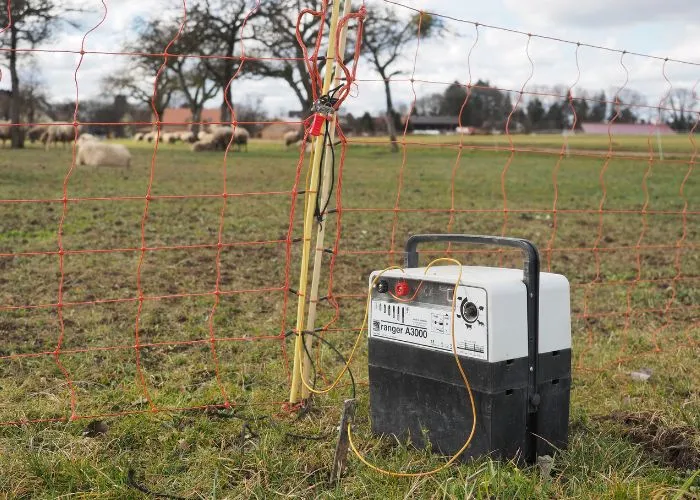
If you shop for an electric fence energizer without knowing what the numbers on the box mean, it is easy to buy a unit that is either far too weak for your perimeter or unnecessarily expensive for a small urban wall. Manufacturers list ratings like 9,500V, 4.5 Stored Joules, 3.2 Output Joules, and up to 30 km of fence line—terms that often confuse first-time buyers.
Understanding how voltage, joules, and fence load work together is the key to selecting an energizer that delivers a reliable, unmistakable shock every single day without false alarms or premature burnout. Below is a clear, practical guide to decoding energizer specifications and sizing the right unit for your property.
Voltage vs. Joules: What Actually Makes an Electric Fence Effective?
Many buyers assume that higher voltage automatically means a stronger fence. In reality, voltage and joules do two completely different jobs—and both must be balanced for optimal performance.
Voltage (Volts / Kilovolts): The “Push”
Voltage measures the electrical pressure pushing pulses through the wire and across barriers like thick clothing, leather boots, dry skin, or animal fur.
- Target Range: A healthy security or livestock fence should maintain 7,000V to 9,500V (7.0 kV – 9.5 kV) along the entire perimeter.
- Minimum Effective Threshold: For human security deterrence and thick-coated livestock (like sheep or goats), anything below 5,000V becomes significantly less effective.
Joules (J): The “Punch”
Joules measure the actual energy packed into each electrical pulse. Think of voltage as the speed of a vehicle and joules as its weight: a bicycle and a truck might both move at 60 km/h, but the truck carries vastly more kinetic energy upon impact.
In an electric fence, joules determine two critical things:
- Shock Intensity: How strongly the pulse contracts muscles upon contact.
- Load-Handling Capacity: The energizer’s ability to maintain high voltage even when wet grass, tree branches, dust on insulators, or long wire distances drain energy from the line.
Stored Joules vs. Output Joules: Watch the Fine Print
When comparing energizer brands, always check whether the rating listed on the packaging refers to Stored Joules or Output Joules:
- Stored Joules: The amount of energy charged inside the energizer’s internal capacitor bank just before firing a pulse.
- Output Joules: The actual energy delivered out onto the fence terminals after minor internal transformer losses (typically 65% to 80% of stored joules).
Buyer Tip: Always compare Output Joules when evaluating two competing models. A unit advertised as “5 Stored Joules” typically delivers around 3.5 Output Joules to your fence wires.
Why Manufacturer “Kilometer Ratings” Can Be Misleading
Agricultural energizers often boast headline figures like “Powers up to 40 km of fence.” In real-world conditions, that number represents a single clean wire suspended in dry air with zero vegetation contact and perfect insulation—conditions that almost never exist outdoors.
In practice, total wire length is only one factor affecting energizer load:
- Multi-Strand Wire Count: A 1-kilometer perimeter with 8 strands of wire actually contains 8 kilometers of conductor.
- Vegetation Contact: Every blade of wet grass or overhanging leaf touching a live wire acts like a tiny leak to the ground, draining joules from every pulse.
- Insulator Dirt and Moisture: Coastal salt spray, industrial dust, and morning dew create micro-paths for voltage leakage across insulators.
For security energizers, manufacturers typically rate capacity by output joules and maximum recommended perimeter length (e.g., up to 500m, 1,500m, or 5,000m of multi-strand wall-top fencing) rather than idealized single-wire kilometers.
Security Energizers vs. Agricultural Energizers
Before sizing your unit, make sure you are choosing from the right product category:
| Feature | Security Energizer | Agricultural / Livestock Energizer |
| Primary Purpose | Perimeter intrusion deterrence + 24/7 tamper detection | Animal containment and predator exclusion |
| Loop Monitoring | Yes — measures return voltage to detect cut or shorted wires | No — pulses outward only (open-ended wire runs) |
| Alarm & Siren Outputs | Built-in siren relay, strobe output, armed response & app triggers | Usually none (some premium models include basic fault lights) |
| Typical Joule Range | 0.8J to 8.0J (capped for urban safety compliance) | 0.25J to 25J+ (high power for long fences & heavy weeds) |
| Zone Capability | Single-zone, 2-zone, or multi-zone addressable control | Single-zone output |
How to Choose the Right Energizer Size for Your Property
Use the sizing table below as a practical baseline for matching output joules and features to your specific installation:
| Property / Application Type | Typical Perimeter Length | Recommended Output Joules | Key Features to Look For |
| Standard Residential Home (6–10 strand wall-top) | 80m – 250m | 1.0J – 2.5J | 12V battery backup, siren/alarm relay, keypad or remote arming |
| Large Residential Compound or Gated Estate | 250m – 1,000m | 2.5J – 5.0J | Multi-zone monitoring (2–4 zones), mobile app alerts, dual AC/solar input |
| Commercial Warehouse or Industrial Park | 500m – 3,000m+ | 4.5J – 8.0J | Multi-zone LCD keypad, BMS/CCTV relay integration, heavy surge protection |
| Small Farm, Paddock, or Orchard (Clean wire) | 1 km – 5 km total wire | 1.0J – 3.0J | Low-impedance circuitry, solar compatibility, weatherproof IP65 casing |
| Large Ranch, Game Reserve, or Heavy-Weed Perimeter | 5 km – 30+ km total wire | 5.0J – 15.0J+ | High-joule low-impedance output, digital voltage display, heavy-duty lightning protection |
Five Essential Features Worth Paying For
When narrowing down specific energizer models, prioritize five practical engineering features that pay off over years of daily use:
- Low-Impedance Technology: Modern low-impedance energizers automatically sense when weeds or dampness create resistance on the line and push extra reserve energy into the pulse to keep voltage high, rather than bogging down like older high-impedance units.
- Built-In Battery Charging & Deep-Discharge Protection: Essential for regions with frequent power outages. Look for a smart charger that prevents overcharging when grid power is steady and disconnects the battery cleanly before a prolonged blackout drains it below damaging voltage levels.
- High/Low Voltage Mode (Security Units): Allows you to switch the fence from full deterrent power (8,500V) at night to a safe, low-voltage monitoring mode (around 1,000V) during the day while gardeners or maintenance staff work near the wall—keeping cut-wire detection active without risking accidental shocks.
- Clear Diagnostic Indicators: On-board LEDs or an LCD screen showing live outgoing voltage, return voltage, battery health, and zone fault status make troubleshooting dramatically faster.
- IEC 60335-2-76 Safety Certification: Confirms the unit adheres to international pulse energy and timing limits so your perimeter stays legally compliant and non-lethal.