
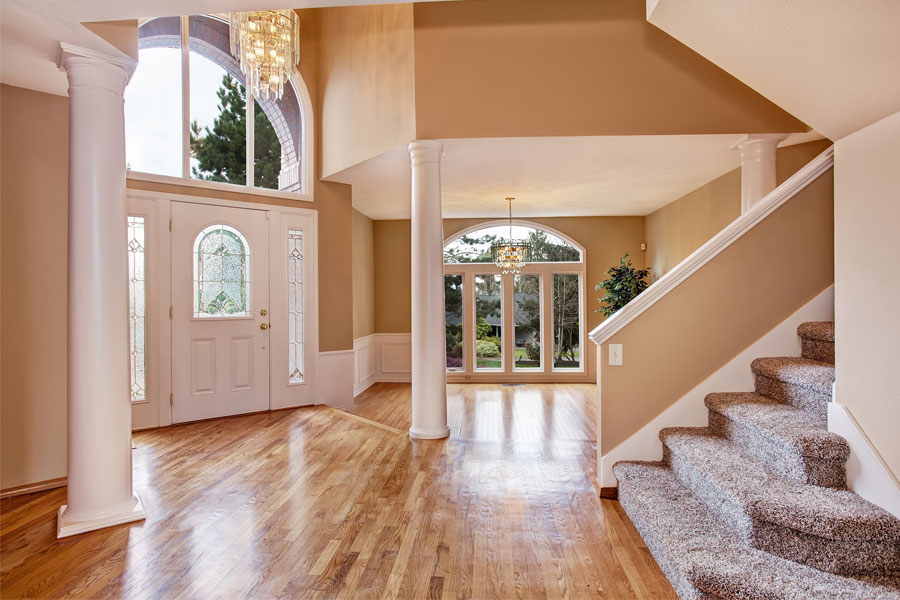
Interior columns can be awkward when they interrupt furniture placement, but they can also become useful architectural features. Instead of trying to disguise every post, thoughtful interior column ideas use proportion, trim, paint, paneling, or built-ins to connect the column with the surrounding room and give it a clear visual purpose.
Decide Whether to Blend or Highlight the Column
Painting a column the same color as nearby walls reduces contrast and makes it feel quieter. This approach works well when the post sits near a circulation path or when the room already contains several strong design features.
Highlighting the column takes the opposite approach. Wood cladding, panel molding, stone, or contrasting paint turns it into a focal element.
Neither choice is automatically better. The right approach depends on whether the column’s location helps or interrupts the room’s visual organization.
Connect Columns With Nearby Millwork
A freestanding post may look less accidental when its detailing relates to cabinetry, wall paneling, door casing, or baseboards. Even a simple trim band around the top and bottom can visually connect the column to surrounding architecture.
Looking through decorative interior planning can help clarify how repeating profiles and proportions creates continuity. If the room uses simple square-edged millwork, an ornate classical column may feel disconnected unless similar detailing appears elsewhere.
Turn a Structural Obstacle Into a Room Feature
Columns can sometimes help define separate functions in open layouts. A post between a kitchen and living room may mark the transition without requiring a full wall.
In living areas built around a hearth, room-warming design concepts can provide useful inspiration for coordinating columns with mantels, built-ins, or feature walls. Similar materials don’t need to match perfectly; repeating one finish or proportion may be enough.
| Column Treatment | Best Use | Result |
|---|---|---|
| Wall-color paint | Reduce attention | Quiet integration |
| Wood cladding | Add warmth | Stronger feature |
| Panel molding | Add detail | Traditional character |
Use Columns to Support Larger Architectural Ideas
Two columns can create a framed transition between rooms, particularly when joined with a header or partial wall. A single column can also become the edge of a built-in bookcase, console, bench, or storage unit.
Homeowners comparing exterior architecture inspiration may notice that repetition is common in successful architecture. Carrying shapes or materials from porches, beams, exterior posts, or other parts of the house into selected interior details can make the design feel more related.
Function should remain practical. Built-ins around columns must preserve comfortable walking paths and usable furniture layouts.
Common Attempts to Hide Columns That Backfire
Wrapping a column until it becomes dramatically larger can create a bigger problem than the original post. Extra molding, shelves, stone, or cabinetry adds visual weight, and narrow rooms may not have enough space to support it.
Fake symmetry can also be costly. Adding unnecessary matching columns simply to balance one structural post may reduce flexibility without improving the room. Before building anything, test the idea against traffic paths, furniture dimensions, sightlines, and ceiling height.
Sometimes the least complicated treatment is the strongest one.
Frequently Asked Questions
Can you remove an interior column?
Possibly, but never assume a column is decorative. A structural professional or qualified contractor should determine whether it carries loads before removal or major modification is considered.
How can you decorate a square support column?
Paint, wood cladding, simple panel molding, or integration with shelving can work well. Choose details that repeat shapes and finishes already present in the room.
Should interior columns match wall colors?
They can. Matching the walls minimizes visual emphasis, while a contrasting finish makes the column more architectural. The better choice depends on how prominent you want the feature to become.
Give the Column a Reason to Be Seen
A column feels less awkward when its treatment responds to the room around it. Decide whether it should recede, define a zone, frame an opening, or connect with built-in features before adding decorative layers. Once the purpose is clear, materials and trim become easier to choose, and the column can feel like architecture rather than an obstacle.