
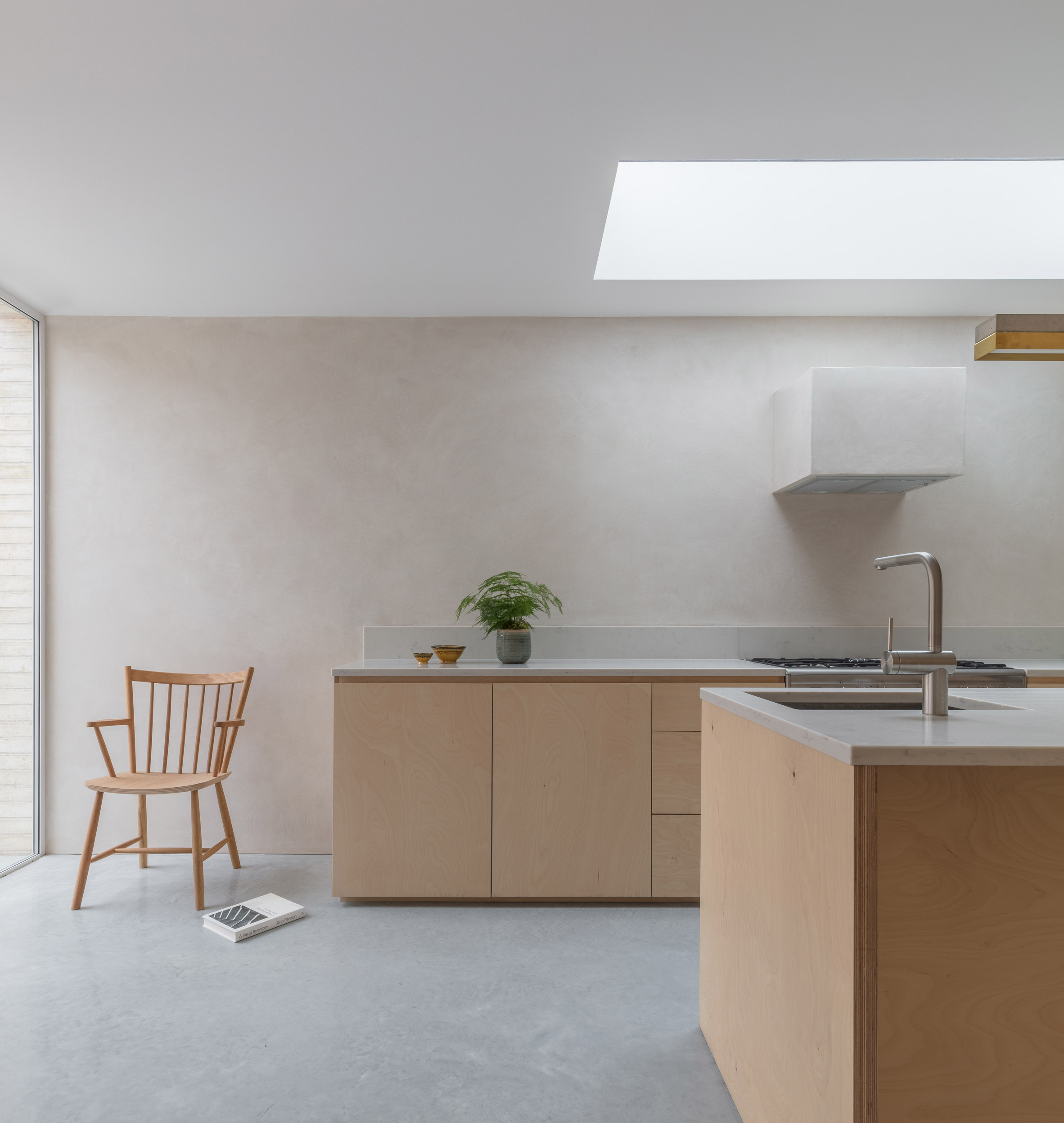
Clay plaster introduces texture in a way that feels quiet rather than heavily decorative. Subtle trowel marks, earthy color variation, and a matte surface can soften rooms dominated by straight lines and manufactured finishes. The most useful clay plaster ideas allow that natural character to remain visible while controlling how much texture, contrast, and visual warmth the room actually needs.
Start With the Mood of the Room
Clay plaster works especially well where calm is more important than visual drama. Bedrooms, reading areas, dining rooms, home offices, and relaxed living spaces can all benefit from its subdued surface movement.
The finish doesn’t need a strong color to become noticeable. Soft sand, oatmeal, chalk, muted clay, pale taupe, and earthy gray can reveal enough variation through texture alone.
Natural daylight adds another layer because slight ridges and trowel marks produce gentle shadows as the sun changes position.
Use Texture Where the Eye Naturally Rests
A large uninterrupted wall often gives clay plaster enough room to show its character. Behind a bed, sofa, dining table, or console, the finish can act as a quiet background without needing artwork across every section.
When collecting natural design references, pay attention to the relationship between empty wall space and decorative objects. Texture becomes easier to appreciate when some of the surface remains uncovered.
Smaller applications can work too, especially in niches or around architectural features where a change in texture helps create hierarchy.
Pair Clay With Materials That Feel Grounded
Timber is an obvious companion, but it isn’t the only choice. Linen, wool, ceramic, stone, leather, woven fibers, and softly finished metal can all sit comfortably beside a clay wall.
Home design inspiration can help when building a broader material palette, but repetition should remain controlled. A room filled with too many earthy finishes can quickly lose contrast.
| Material Pairing | Overall Effect | Best Use |
|---|---|---|
| Light timber | Warm and quiet | Bedrooms |
| Dark wood | Strong contrast | Dining rooms |
| Linen | Soft and relaxed | Living spaces |
| Matte metal | Cleaner modern edge | Contemporary rooms |
One contrasting element often strengthens the room. A black lamp, dark side table, or crisp pale sofa can keep an earthy palette from becoming visually muddy.
Create Calm Without Making Everything Beige
Natural interiors often drift toward a single family of beige tones. Clay plaster can support that palette, but the room still needs some variation in value, shape, or material.
Looking through casual interior styling may offer useful ideas for building comfort through textiles and furniture rather than adding more wall decoration. Deep brown, olive, muted rust, charcoal, and warm white can all create useful contrast.
Keep Accessories Selective
Clay plaster already provides surface detail. A few larger objects generally work better than many small decorative pieces competing against the wall.
Simple artwork, handmade ceramics, sculptural lighting, or a strong timber piece may be enough.
Why More Texture Isn’t Always Better
It’s easy to assume that a natural wall finish should look visibly rough. In practice, excessive trowel movement can overwhelm a small room and make furniture placement harder because every area competes for attention.
Another mistake is combining clay plaster with several other highly expressive materials. Heavy wood grain, patterned textiles, irregular stone, woven wall art, and textured plaster may all be attractive individually, but together they can weaken the calm atmosphere the finish was meant to create.
Frequently Asked Questions
Does clay plaster suit minimalist rooms?
Yes. Its quiet texture can prevent minimalist rooms from feeling flat while preserving a restrained color palette and simple architectural lines.
What furniture works with clay plaster?
Both modern and traditional furniture can work. The strongest pairings usually use clear shapes and materials such as timber, linen, leather, wool, metal, or natural stone.
Should clay plaster be heavily textured?
Not necessarily. A subtle hand-finished surface often creates enough movement. The right amount of texture depends on room size, lighting, furniture, and how much visual activity already exists.
Give the Wall Space to Breathe
Clay plaster doesn’t need elaborate styling to make an impact. Choose a surface large enough to show its natural variation, pair it with a few contrasting materials, and resist filling every wall with objects. The quieter the surrounding composition becomes, the easier it is to appreciate the finish’s texture and changing relationship with light.