
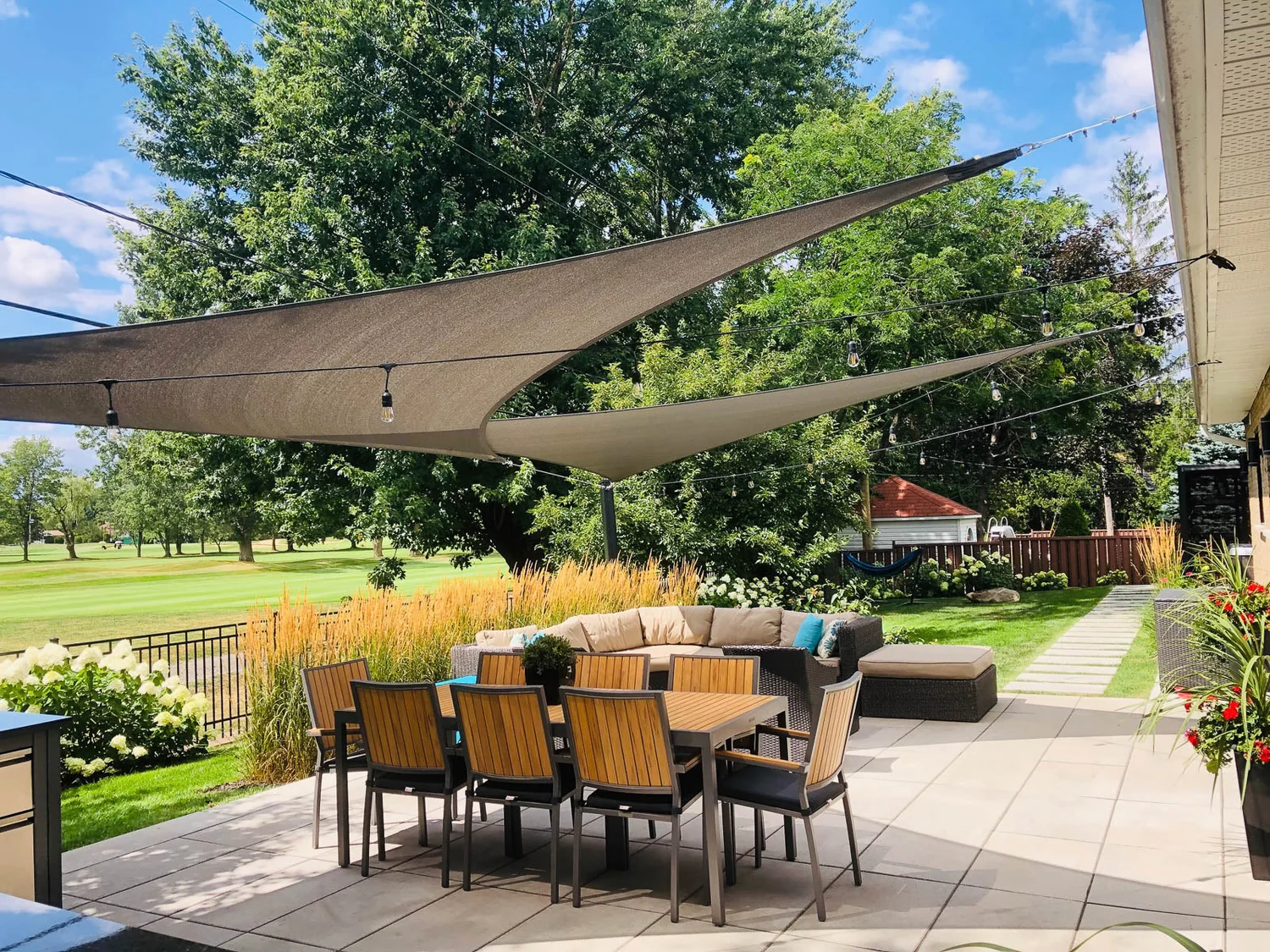
Shade sails can cover patios, play spaces, poolsides, and garden seating without the visual weight of a conventional roof. Effective shade sail ideas use thoughtful placement, strong anchor points, and varied heights to create useful coverage while keeping the outdoor area open.
Their apparent simplicity can be misleading, though. Shape and tension matter as much as fabric size.
Position Shade Where People Actually Sit
Start with furniture and activity zones rather than choosing sail placement from an overhead drawing alone. Shade that misses the dining table during the hottest part of the day won’t solve the original problem.
Track the sun across the space before deciding where the sail should sit. Seasonal changes can shift shade farther than expected.
Use Height Changes to Create Tension
Shade sails normally work better when attachment points aren’t all at identical heights. Variation helps create the twisting form associated with properly tensioned installations and can encourage water runoff.
Choose a Shape That Fits the Area
Triangular sails create a strong sculptural effect but may leave more uncovered gaps. Square and rectangular sails generally cover larger seating areas with fewer pieces.
Reviewing broader outdoor space references may help when coordinating shade sails with pools, patios, walkways, or existing garden structures.
Overlapping two smaller sails can sometimes look lighter than installing one large sheet.
Make the Seating Area Feel Intentional
Shade works best when it forms part of a complete outdoor arrangement. Place chairs, tables, lighting, planters, and paving so the sail defines a usable zone rather than floating randomly above unused ground.
Ideas from relaxed living concepts can also inspire softer seating arrangements that use shade as part of an outdoor room rather than treating it only as sun protection.
| Sail Layout | Main Advantage | Watch For |
|---|---|---|
| Single triangle | Light appearance | Smaller shaded area |
| Single rectangle | Broad coverage | Requires strong anchors |
| Overlapping sails | Flexible styling | More attachment points |
| Angled sail | Better visual movement | Careful positioning needed |
Plan Strong Attachment Points
Shade sails generate tension, so their supports need more thought than ordinary decorative fabric. Existing walls, posts, and structures should be suitable for the forces involved.
Considering wider property layout ideas can be useful before deciding whether permanent posts should sit near paths, boundaries, planting beds, or future outdoor projects.
Also think about clearance. A support post placed too close to a narrow walkway can solve the shade problem while creating a new circulation problem.
Common Shade Sail Problems
Loose sails tend to sag, flap, collect water, and look unfinished. Poorly positioned sails may provide plenty of shade in the morning yet leave the main seating area exposed later when protection matters more.
Bigger isn’t automatically better. Large sails demand stronger supports and can visually dominate compact gardens.
People also underestimate seasonal removal and maintenance. Depending on the product and local weather, fabric may need periodic cleaning, retensioning, inspection, or temporary removal during severe conditions.
Frequently Asked Questions
What shape of shade sail gives the most coverage?
Rectangular and square sails generally provide broader continuous coverage than triangular designs. Triangles are often chosen for their lighter appearance or used in overlapping combinations.
Can I install two shade sails together?
Yes. Overlapping sails can create flexible coverage and a more layered appearance. Their attachment points and heights need careful planning so the sails don’t rub against each other.
Where should a shade sail be positioned over seating?
Place it according to the sun’s direction during the hours the seating area is normally used. The sail may need to sit slightly offset rather than directly above the furniture.
Design the Shade Around Real Use
Good shade sail ideas begin with comfort rather than decoration. Watch where the sun falls, identify the exact area that needs protection, and plan dependable attachment points before choosing the final shape.
A well-positioned sail can make a hot seating area usable for much more of the day without enclosing the garden beneath a permanent roof. Flexible coverage is the advantage, so protect that sense of openness.