
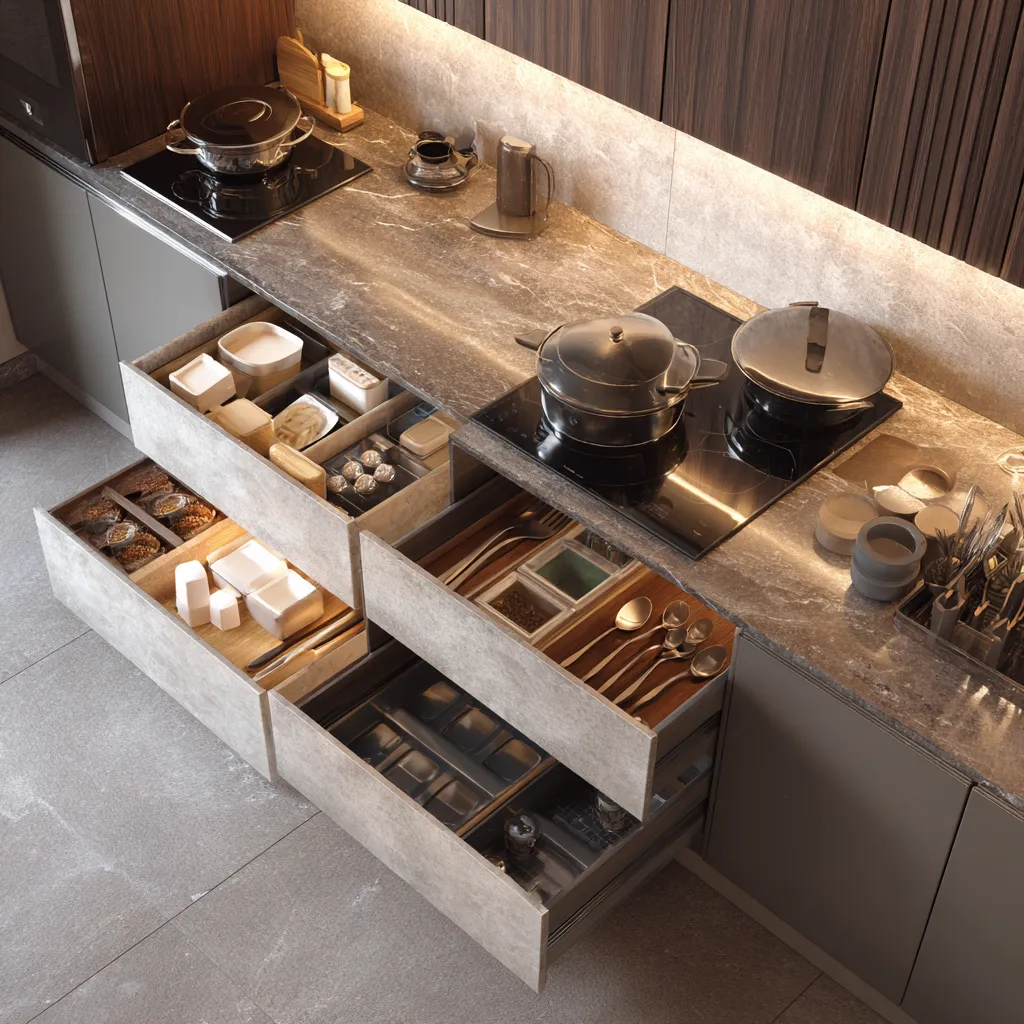
Deep cabinets offer plenty of capacity, yet much of that space becomes inconvenient when objects disappear behind one another. Pull-out shelves turn hidden cabinet depth into usable storage by bringing contents toward you. Smart pull out shelf ideas consider weight, hardware quality, cabinet openings, item height, and how far the shelf needs to extend for comfortable access.
Choose the Cabinets With the Biggest Access Problems
Not every cabinet needs a sliding shelf. Start with deep base cabinets where cookware, small appliances, pantry goods, or cleaning supplies regularly get pushed toward the back.
General browsing through home improvement references can provide inspiration during planning, but measure the actual clear opening before buying hardware. Hinges, face frames, plumbing, and door openings may reduce the usable width.
Measure More Than Once
Record inside width, depth, and height, plus the narrowest point through which the shelf must pass. A small measurement error can prevent the finished unit from sliding freely.
Match the Shelf to What It Will Carry
A pull-out for spices has different demands from one holding cast-iron cookware. Heavy storage needs strong slides, secure attachment points, and a shelf structure capable of supporting the intended load.
Cabinet projects sometimes happen alongside broader property improvements, with owners also reviewing site planning resources and other general material. For the cabinet itself, manufacturer specifications should guide hardware selection rather than appearance alone.
Full-extension slides are especially useful because they allow the back of the shelf to move near the cabinet opening.
| Shelf Use | Helpful Feature | Main Concern |
|---|---|---|
| Heavy cookware | Strong full-extension slides | Load capacity |
| Pantry goods | Raised shelf edges | Items tipping |
| Small appliances | Wide stable platform | Shelf strength |
| Cleaning supplies | Washable tray | Leaks and spills |
Keep Stored Items Stable During Movement
A shelf that slides smoothly can still be frustrating if its contents fall over. Raised sides, rails, or shallow tray edges help keep jars, bottles, pans, and containers from shifting.
Kitchen changes often connect with larger design decisions around the home, and outdoor layout concepts may appear in broader renovation research. Inside a deep cabinet, however, stability depends on simple physical details such as shelf edges and controlled slide movement.
Avoid excessively tall rails that make objects difficult to lift out. The goal is containment without creating another barrier.
Consider Door and Hinge Interference
A pull-out shelf needs a clear path through the cabinet opening. Hinges can project into that path, particularly on framed cabinets.
Some installations use spacers to position the slides inward. Others require narrower shelves. Check both sides of the opening before choosing dimensions, especially when doors don’t swing completely out of the way.
Where Pull-Out Storage Can Fail
The most common problem is trying to maximize shelf width so aggressively that the mechanism rubs against hinges or cabinet frames. A slightly narrower shelf that operates reliably is more useful than one that constantly sticks.
Overloading is another issue. A shelf may look strong while the slides or mounting screws are carrying more weight than intended. Heavy cookware and appliances need hardware selected for the load, not the cheapest slide that happens to fit.
Frequently Asked Questions
Can pull-out shelves be added to existing cabinets?
Yes, many existing base cabinets can be fitted with aftermarket pull-outs. The available opening, cabinet structure, hinges, plumbing, and interior dimensions determine which systems will fit.
Are drawers better than pull-out shelves?
Drawers are excellent when designing new cabinetry, while pull-out shelves can provide similar access inside existing cabinets without replacing the entire cabinet box. Each approach has different installation requirements.
Should pull-out shelves extend completely outside the cabinet?
Full extension generally provides better access to items stored at the back. Partial-extension hardware may cost less or fit certain applications, but some cabinet depth remains harder to reach.
Make Deep Cabinets Work Harder
Good pull out shelf ideas focus on access rather than adding storage capacity for its own sake. Start with the cabinet that causes the most frustration, measure every obstruction, and choose hardware suited to the expected weight. When the shelf moves smoothly and exposes its full contents, deep cabinet space becomes easier to organize and much less likely to be forgotten.